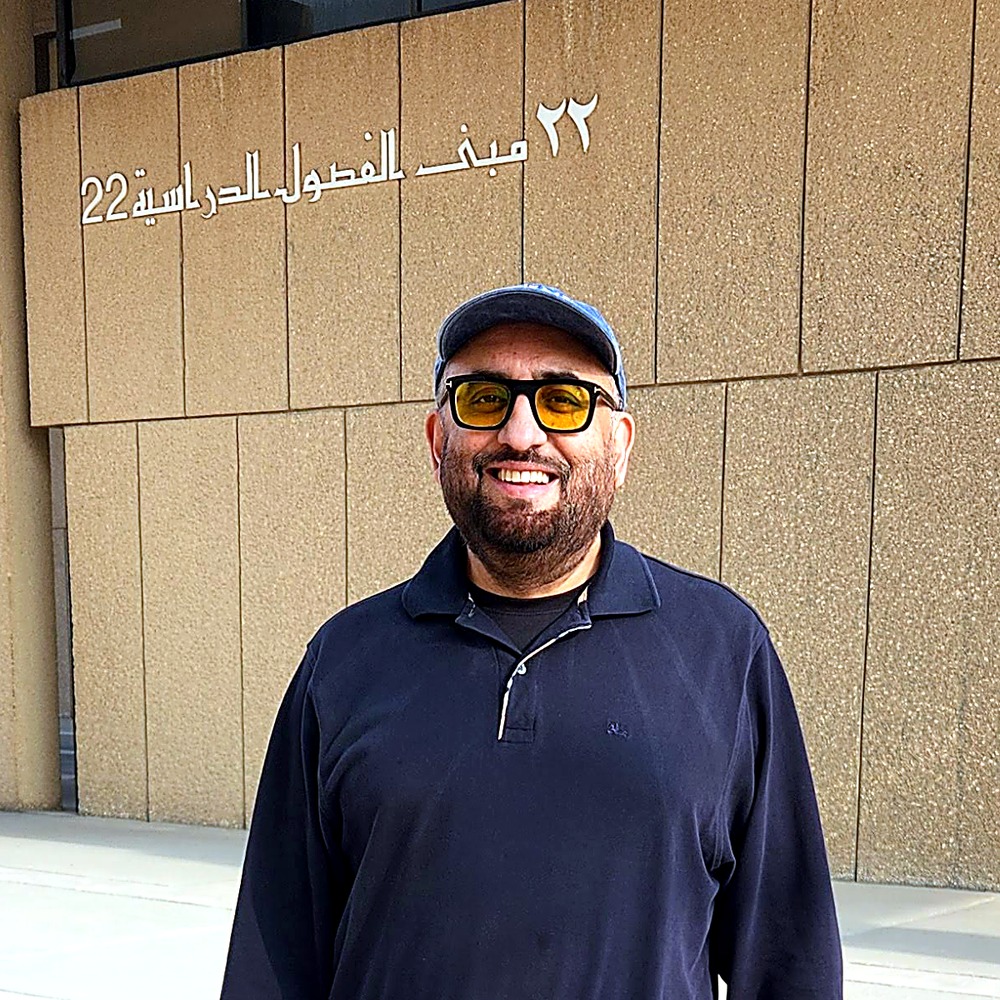
Overview
Shahzad Kirmani is a Pakistani and American electrical engineer, optical scientist, and entrepreneur widely recognized as a pioneer in the field of 3D metrology and structured light scanning. He is the founder and CEO of VisionMaster, Inc., the precision measurement and computer vision company he established in Minneapolis in 1996 and later relocated to Portland, Maine.
Over more than three decades, Shahzad has made foundational contributions to white light interferometry, stripe-based 3D measurement, and automated optical inspection for electronics manufacturing. His early work at CyberOptics Corporation in the early 1990s helped establish the technical groundwork for modern white-light precision inspection systems worldwide.
His technical breadth, spanning Fourier optics, digital signal processing, image processing, optical fiber communications, and antenna theory, positions him at the intersection of physics and engineering that advanced 3D metrology demands. Rarer still is the combination he brings to it: a hands-on engineer who designs the optics and writes the code, and an executive who has founded a company, raised capital, led teams of dozens, and shipped fifteen products to market.
Early Education
Shahzad received his primary education at Sacred Heart Cathedral School in Lahore, then attended St. Anthony's for middle and high school before going on to Aitchison College for his A Levels. He excelled throughout, consistently topping his class. In 1984, he sat for the University of Cambridge Local Examinations Syndicate, the internationally administered O-Level examinations graded by Cambridge University, and earned a grade aggregate of SIX, the highest possible, awarding the top grade of ONE in all six subjects. It was a distinction reached by just a handful of candidates worldwide each year.
King Fahd University of Petroleum & Minerals
Shahzad pursued his undergraduate degree at the King Fahd University of Petroleum and Minerals (KFUPM) in Dhahran, Saudi Arabia, one of the premier technical universities in West Asia and consistently ranked among the top engineering institutions globally. He enrolled in the Bachelor of Science program in Electrical Engineering, with Computer Science as a second major field of study.
His coursework concentrated on the specialized disciplines that would define his later work: Signal Processing, Communication Systems, Antenna Theory, Optical Fiber Communications, Network Theory, Digital Logic Design, and Microcomputer Organization. This focus built the precise multi-disciplinary foundation (optics, signals, and systems) at the heart of advanced 3D metrology.
For his Senior Project, Shahzad designed and built a fully automated, PC-based digital telephone exchange (PABX), complete with DTMF decoders and fast solid-state relay-based line switching, scalable to hundreds of lines. The project foreshadowed the blend of real-time signal processing, hardware design, and systems integration that would become his hallmark.
He graduated on June 14, 1989 with a Bachelor of Science in Electrical Engineering, receiving his degree With Highest Honors, the highest academic distinction awarded by KFUPM.
Graduate Studies
Drexel University (1989–1990)
After completing his undergraduate degree, Shahzad began graduate studies at Drexel University in Philadelphia, Pennsylvania in the College of Engineering. His coursework included advanced topics in Stochastic Systems, Digital Signal Processing, Radar Detection Theory, and Signal Processing, disciplines that would directly inform his later optical measurement work. He completed his Drexel coursework before transferring to the University of Minnesota to continue his graduate work.
University of Minnesota Twin Cities — Master of Science in Electrical Engineering (1991)
He transferred his graduate credits to the University of Minnesota and enrolled in the graduate MSEE program in the Department of Electrical Engineering, where his studies centered on optics: Fourier Optics, Contemporary Optics, and Optical System Design, complemented by Digital Filter Theory, Signal Detection & Estimation, and VLSI Design.
His graduate thesis, “Surface Roughness Estimation Using Fraunhofer Diffraction Imaging of Laser Speckle,” applied diffraction theory to optical surface measurement, an early indication of the direction his career would take. He was awarded the Master of Science in Electrical Engineering by the University of Minnesota on December 31, 1991.
The Fourier Optics Exam That Started It All
In the Fall of 1990, Shahzad was taking Fourier Optics (EE 5625) at the University of Minnesota, taught by Professor Dr. Steven Case. On the midquarter examination held on November 7, 1990, he scored 95 out of 100, the top score in the class. The second highest score was 72. The gap was not lost on Dr. Case.
Dr. Case called Shahzad into his office. He explained that he ran a small company on University Avenue in Minneapolis called CyberOptics Corporation, a precision optical measurement firm he had founded, and invited him to visit. They drove together in Dr. Case's Mazda RX-7. That visit changed the course of 3D metrology.
Dr. Case offered him a research assistant position at CyberOptics. Energized by the environment and the applied nature of the work, Shahzad dropped his University research assignment and joined CyberOptics, becoming the last of the hand-picked graduate students that Dr. Case had recruited to staff the company's R&D team.
Exam Result — November 7, 1990
Fourier Optics EE5625 · Midquarter Exam · Dr. S. Case · Shahzad Kirmani: 95/100 · Second highest in class: 72/100
The CyberOptics Era (1990–1995)
Research Engineer — The Last Disciple
When Shahzad joined CyberOptics in 1990, the company was primarily a laser-based measurement firm. Dr. Case had carefully built his R&D team from his best graduate students, each vetted for both technical depth and scientific curiosity. Shahzad was the last to join that cohort, completing the core group that would reshape optical inspection technology.
In 1991, despite a recession economy, Jeff Jalkio (Dr. Case's first graduate student transplant and then Vice President of R&D) offered him a full-time position as Research Engineer. He accepted, discontinuing his Ph.D. pursuit to focus on the applied engineering work he found far more compelling.
Bringing Image Processing to CyberOptics
With a background spanning both digital signal processing and optics, Shahzad was the first engineer to bring image processing to CyberOptics, a company that had, until 1992, relied exclusively on laser-based measurement. This capability opened an entirely new technical direction for the company.
Project “Albino Zebra” and the Birth of White Light 3D Inspection
Shahzad conceived and championed the internal project code-named “Albino Zebra”, a white light interferometry approach to solder paste inspection (SPI). Using MathCad, he produced the first proof of concept by pioneering a stripe centroid shift technique to measure heights optically. This breakthrough was technically significant: it demonstrated that white (broadband) light, structured into fringe patterns, could be used to extract 3D height information from surfaces with the precision required for fine features on PCBs.
Full R&D resources were committed to the project following his proof of concept. The system was introduced commercially in 1994 as the world's first white light interferometry inspection system. After names like “SolderMiser” were considered, the product was branded the Sentry, the forebearer of CyberOptics' current SE500 product line.
“Sentry on a Stick”
With the Sentry's technology proven and CyberOptics' laser-based LSM desktop product already successful, Shahzad envisioned what he and Dr. Case jokingly called “Sentry on a Stick”, a nod to the Minnesota State Fair tradition of serving everything on a stick. The concept was a sub-$20,000 desktop precision measurement solution built on the Sentry's white light technology, bringing interferometric precision to a benchtop form factor.
As CyberOptics went public and its culture shifted away from Dr. Case's founding ethos, Shahzad brought the idea to management. It was rejected. He informed them he would build it on his own. And he did.
Founding VisionMaster (1995–1997)
In March 1995, Shahzad resigned from CyberOptics and joined a wireless data communications company to wait out the non-compete period. Exactly one year later, armed with $12,000 in savings, a clear technical vision, and maxed-out credit cards, he quit that excellent position and locked himself in his townhouse to start VisionMaster development.
His approach diverged from what he had built at CyberOptics. He improved upon the original white light interferometry techniques and took a different, novel approach to the sensor architecture itself. Nine months of intense solitary development followed. In early 1997, the first VisionMaster prototype was complete: a pioneering white light SPI desktop system, built on a shoestring, in a townhouse, by a single engineer with a precise and proven idea.
The Corporate Lineage
The operating entity behind the launch was Crescent Technologies, Inc., a Minnesota corporation Shahzad founded at 3670 Gettysburg Avenue in Minneapolis. The VisionMaster name was first used on January 14, 1997, and the trademark was filed with the USPTO on December 25, 1998 (Serial No. 75607324, Reg. No. 2307553). Crescent introduced the first commercial product, the VM150, in June 1998, marking the VisionMaster brand's first use in commerce.
In 2001, Shahzad co-founded Delta Indus Systems in Lahore, Pakistan to handle all engineering design work for the product line. The name is a quiet nod to “a small change in the Indus,” the river valley that gave rise to one of the oldest known civilizations. Crescent wound down operations that same year.
In 2011, Shahzad incorporated VisionMaster, Inc. as the unified successor entity and re-registered the trademark (Serial No. 85125507, Reg. No. 3954951), which remains active today.
Building VisionMaster & Consulting Across Industries
Two Decades Building VisionMaster (1996–2016)
As founder and CEO, Shahzad turned a townhouse prototype into a working company. Over twenty years he created the core structured light scanning technology behind the firm's 3D precision measurement systems and rolled out 15 products across two product categories, at an average development cadence of roughly twelve months each. Along the way he hired more than 100 engineers, technicians, machinists, assemblers and support staff, led a 35+ person on-shore/off-shore engineering team across software, hardware, and mechanical design, and raised private equity to stand up an off-shore design and deployment structure.
He didn't just architect the optics; he built the factory around them. VisionMaster brought PCB fabrication and CNC machining in-house to compress development cycles, wrote a multi-processor image-processing and math library, designed parametric classification algorithms for automatic PCB component identification, headed development of FPGA-based USB and Gigabit Ethernet machine-vision cameras, and even implemented encrypted dynamic-library methods to protect the company's intellectual property from piracy. The result: a vertically integrated operation with staff turnover under 5% in any three-year window.
Solving Hard Problems Across Industries
What sets Shahzad apart is a rare combination: deep technical engineering paired with the executive experience to lead teams, set strategy, and ship. Few people can drop into an unfamiliar domain, frame the problem at the whiteboard, and still write the code that solves it, then stand it up as a product. He has done exactly that again and again, taking on some of the hardest sensing problems in defense, aerospace, marine science, automotive safety, retail, and materials testing, each time arriving as the subject-matter expert and leaving behind a deployed, optimized system.
L3Harris Technologies — Insight Warrior Systems
Defense
Jump-started a seven-year moribund weapon-scope target-acquisition program and delivered a working alternate implementation in 15 months, guiding a team of software and firmware engineers. Architected the full image and sensor-fusion pipeline for a head-mounted multi-spectral AR/SLAM system, and squeezed real-time feature extraction and matching onto bare-metal Xilinx Zynq FPGAs and i.MX7 processors to meet the brutal power budget of a soldier-worn device.
InnovaSea Systems
Aquaculture
Conceived and built a 3D vision system to estimate fish biomass in live aquaculture pens: an underwater stereoscopic rig that deduces fish volume in real time, paired with a Darknet/YOLO model running on an Nvidia Jetson TX2 to recognize and isolate specific species. He even built models to learn and track fish satiation behavior.
Navico
Marine
Took massive, noisy point clouds from sonar returns and made them legible in real time, implementing clustering, segmentation, and surface reconstruction, plus feature and object isolation for underwater sonar imagery, and helped architect an entirely new 3D sonar product. This work underpins several of his issued patents.
Position Imaging / 3D Wifi
Logistics
Advanced a 3D point-cloud package-tracking product from proof-of-concept to prototype, on budget and on schedule, then more than tripled throughput on dense point clouds (from 3–5 fps to 15+ fps) by rewriting algorithm logic and tuning nearest-neighbor search, and advised on building out the engineering team.
Apricart / Blynk Technology
Retail
Engineered a smart shopping cart (cameras, optics, rugged housings, and an efficient on-cart compute engine), developing the core object-recognition technology using multi-dimensional parametric clustering, alongside an IMU-based, image-augmented cart-positioning subsystem.
Driver Technologies, SCOUT, Instron, SRI Sarnoff & others
Automotive, Aerospace & Materials
A descriptor-based motion tracker for an ADAS collision-warning system light enough to run on a dash-mounted phone; a sparse-feature 3D point-cloud system for satellite attitude estimation and docking; precision 2D-dot measurement and camera calibration for materials-testing extensometers; and depth-map and large-codebase optimization for high-resolution UAV imagery.
Defending the Mark
Beginning in 1998, ASC International served as the exclusive distributor of VisionMaster precision inspection systems. The relationship was later formalized in a Design, Development and Distribution Agreement and held for more than a decade. In October 2010, Shahzad ended ASC's exclusivity, and the relationship soured: ASC kept selling inspection systems under the VisionMaster name and trade dress, and had begun building a competing system of its own using VisionMaster's copyrighted software.
In March 2014, VisionMaster, Inc. filed suit in the U.S. District Court for the District of Maine (Case No. 2:14-cv-224-NT), alleging trademark infringement, trade dress misappropriation, and software copyright violation. Citing the mandatory arbitration clause in the original distribution agreement, the court referred the dispute to arbitration. ASC soon rebranded its product line as VISIONPRO, a tacit acknowledgment that the VisionMaster name was never theirs to keep.
Leading AI Teams
In one of his most expansive engagements, Shahzad served as CTO of Hammoq, building and leading a mixed on-/off-shore team of ML, computer vision, full-stack, iOS, and Android engineers, setting the AI strategy, and running the MLOps for a large multi-class apparel recognition model on GCP. He oversaw a 200-plus annotator operation processing hundreds of thousands of training images a month, drove continuous learning into the production CNN models, augmented real-world data with photo-realistic synthetic renders, and introduced LLM-generated product titles and descriptions.
Back at the Bench: A New Generation at VisionMaster
Through every outside engagement, VisionMaster remained home base, and in recent years its core engineering has had Shahzad's full attention again. Returning to the bench as Principal Vision AI Engineer, he is doing what he has always done best: designing the next generation of precision 3D imaging from the optics up.
At the center of this effort is a new-generation 3D structured light scanning camera. Shahzad is driving it end to end: selecting the camera sensor, designing the structured-light projection system, and engineering the telecentric optics that give the system its measurement precision. In parallel, he is prototyping a gigapixel super-resolution camera and projector array, pushing the resolution and field-of-view envelope of what a single structured-light station can capture.
Recently, also under the VisionMaster banner, he developed 3D computer vision for situational awareness in GPS-denied environments, fusing inputs from multiple sensors to give geographically dispersed teams a shared, real-time picture of their surroundings when satellite positioning is unavailable. The system performs 3D corner detection and builds feature-based, adaptive-density point clouds, drawing on his deep toolkit in C++, PCL, OpenCV, and OpenStreetMap.
After more than three decades and a dozen industries (from precision optical inspection to sonar, weapon sights to smart shopping carts), Shahzad is still happiest with his hands on the optics, turning hard physics into systems that ship.
Technical Innovations
Shahzad's technical contributions span the core disciplines of modern 3D optical metrology. His work combines deep theoretical grounding in Fourier and physical optics with practical signal processing and system engineering expertise.
White Light Interferometry for 3D Inspection
Shahzad pioneered the use of white (broadband) structured light and stripe centroid shift analysis for 3D height measurement of deposited material, enabling the first non-laser, non-contact, full-field 3D inspection system. His MathCad proof of concept at CyberOptics in 1992 was the founding technical event of an entire product category.
Stripe Centroid Shift Technique
Rather than relying on phase-shift interferometry alone, he developed a stripe centroid approach that tracked the lateral shift of projected fringe centroids as a function of surface height: a computationally tractable and mechanically robust method that translated well to production-floor environments.
Structured Light Scanning
VisionMaster's product line is built on structured light projection and analysis: projecting known patterns of light onto a surface and measuring distortion to recover 3D shape. Shahzad has advanced this technique across multiple generations of sensors, improving accuracy, speed, and robustness for industrial inline use.
Desktop 3D Measurement Architecture
The VM150 represented a novel sensor and optical architecture that brought interferometric 3D measurement to a desktop form factor at a price point ($20K class) previously unattainable. The design innovations that enabled this are at the heart of the VisionMaster patent portfolio.
Patents
Shahzad is a named inventor on multiple United States patents spanning 3D sonar imaging, automated retail systems, object tracking, and smart cart technology, reflecting the breadth of computer vision and sensing problems he has tackled across industries.
The granted patents below represent only part of the picture. Many of the core technologies Shahzad developed at VisionMaster were deliberately kept as proprietary trade secrets rather than patented, a body of innovation that, had it been filed, could readily have yielded 20 or more additional patents.
Carts with an integrated weighing system for weighing items placed in the carts
US10845235B2
Methods and apparatuses for reconstructing a 3D sonar image
US10061025B2
Presenting objects in a sonar image of an underwater environment
US11639996B2
Methods and apparatuses for constructing a 3D sonar image of objects in an underwater environment
US20190094356A1
Methods and apparatuses for powering electrical systems onboard carts
US20190207427A1
Modular shelving systems for package tracking
US20190098263A1
System and method of object tracking using weight confirmation
US20220405704A1
Systems and methods of determining a location of a mobile container
US20190156513A1